Major Minor
Major in Intercultural Studies
Become a global Christian • Study other cultures • Impact the world
John Brown University
2000 W. University St.,
Siloam Springs, AR 72761
479-524-9500
jbuinfo@jbu.edu
What are you looking for?
In today’s globalizing world, professionals in most fields must know how to navigate cultural differences, build trust across worldviews and lead in diverse environments. The Intercultural Studies major prepares students to engage effectively across cultures — locally and globally — with theological depth, cultural intelligence, and practical leadership skills.
Start your applicationStudents in intercultural studies will expand and enrich their worldview, and develop practical skills in:
Students specialize their training through one of several emphases: community development, intercultural ministries, or international studies. Explore potential career paths of each concentration below.
For students interested in:
Employers increasingly seek adaptable professionals who can work effectively in diverse teams, understand global systems, navigate cultural differences, build trust across communities and lead ethically in complex environments.
Intercultural Studies prepares you to love your neighbor — across cultures, professions and nations — and to bring wisdom, competence and hope into a diverse world.
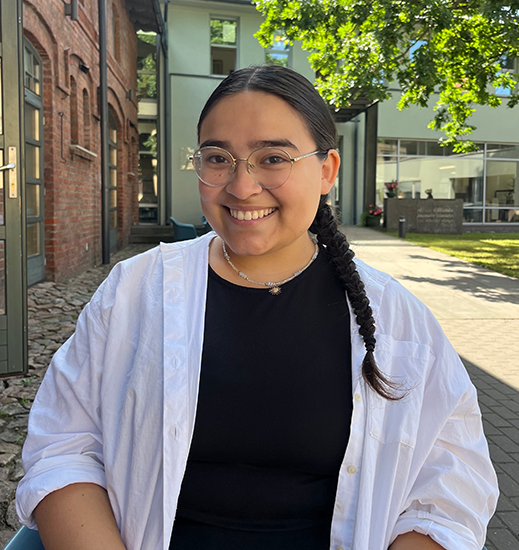
The Intercultural Studies program has been so intentional and helpful in my academic and personal development. The staff, especially Dr. Arrington, has poured into my future endeavors by informing me of opportunities that I couldn't have had before. I spent a month in Lithuania teaching English and now am the Impact Assessment & Reporting Intern at Lifewater International in Bentonville!
Nydia Soriano '24
Students in the intercultural studies department engage with various types of ministry to help identify what field they would like to work in.
Community development workers focus on how to help specific communities improve in certain areas. Workers may be involved in agricultural development and water purifying techniques for rural communities or they may work at a church and be responsible for fostering the local community.
ICS equips students to effectively engage in the world for Jesus Christ. Overseas ministry involves living and working with individuals from different cultures. ICS teaches you how to humbly engage with and learn from those of other cultures as you minister to them.
Cultural anthropologists study, research and write about culture. Anthropologists are interested in how people create culture, the role culture plays in the human experience, and the specific aspects of various cultures. ICS lays the groundwork for further studies in cultural anthropology by introducing students to various aspects of cultural engagement, qualitative research and anthropological theory.
Intercultural studies encourages an investigative mindset through practicing qualitative research. Senior ICS majors conduct a qualitative research project of their own design, learning the aspects and practical implications of qualitative research. Qualitative research focuses on finding the meaning and motivations of people through stories, interviews and archival research.
Through my classes in ICS, Reconciliation Studies, and Psychology, I have become at peace with being uncomfortable. Sometimes it's scary and uncomfortable to grow and it's hard to come face to face with my own shortcomings, but the Lord has definitely been shaping and molding me in ways that I would never have imagined through all JBU has to offer.
Katrina Reimer
Intercultural Studies, '23
The study of culture, language, economics, kinship, marriage, gender, social control, social stratification, religion, art, and cultural change from an applied anthropological perspective using case studies.
A study of the design and methods of the Qualitative Research paradigm, to include phenomenology, ethnography, grounded theory, narrative inquiry and case study, as well as the fieldwork methods of participant-observation, interviewing and archival research. Students will design their own original research project.
A study of major political, economic, and military trends of the twentieth century.
A theoretical and Christ-centered theological exploration of conflict and peace, with practical examination of peacemaking strategies for effective interpersonal conflict resolution.
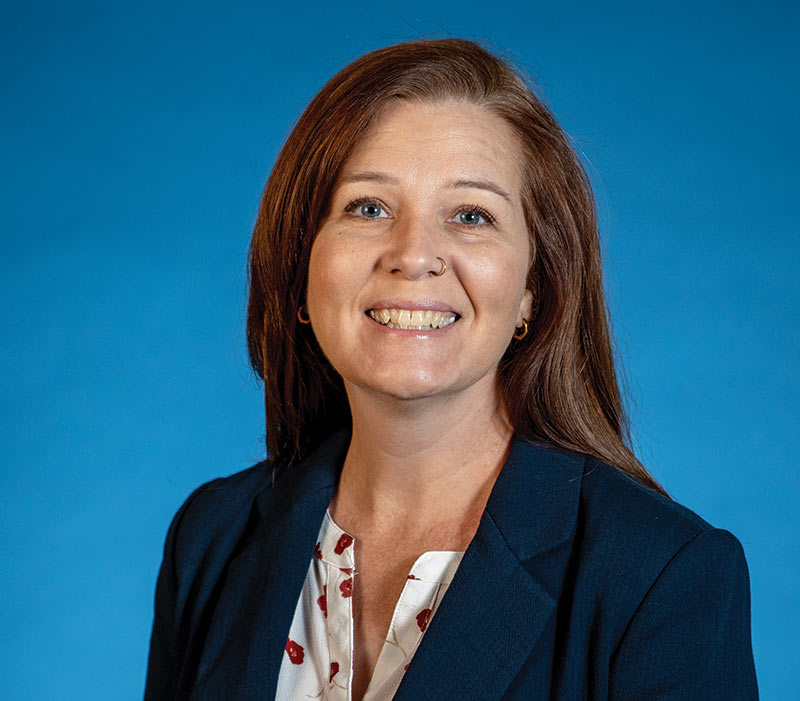
My work as Global Engagement Officer at John Brown University allows me to do what I love: create a global learning environment for university students. My vision and passion for international education have helped establish JBU’s program as one of the top within the Council for Christian Colleges and Universities. I often say that I have the best job on campus, doing what I love and love what I am doing. JBU is a terrific place to serve, I can’t think of anything else I’d rather do.., other than taking Jeremy Clarks post on Top Gear.
My life has followed a circuitous route -- starting with an early childhood in Northern Ireland, moving on to South Korea and, ultimately, bringing me to the United States. My own intercultural experience has equipped me to understand the unique struggles and challenges that face students studying in different countries.
I grew up in Belfast then lived in Korea for 8 years as a student. In 1979 and 1980, I used my knowledge of Korean to translate for the US and British Embassies. I first came to the United States in 1983 to study at Emmaus Bible College in Chicago, Illinois. In 1983 I transferred to JBU, graduating May 1988 with a bachelor’s degree in business administration. I remained at the university as associate registrar. I completed JBU’s master’s program in counselor education in 1997.
Within the campus community, I oversees international student programs, study abroad opportunities, and all international mission projects. In addition, I manage the Irish Studies Program which includes the management of Lakeside Manor, JBU’s campus in Northern Ireland. Professionally, I stay active in the National Association of Foreign Student Educators (NAFSA) Teaching a course in Peace & Conflict Reconciliation in Ireland during the spring term of the Irish Studies Program is a highlight for me.
My work has enabled me to travel to more than 70 countries. Speaking engagements take me on the road nationally and internationally. I am called upon to discuss topics as diverse as international travel risk management, conflict resolution, cross-cultural leadership, Irish Politics and society, as well as to share my personal testimony.
I am currently conducting research on Pilgrimage. Pilgrimage incorporates three main elements: travel and movement; veneration in some form; and a special place or places considered to have some deep significance, often associated with sacred figures or founders. Ireland is just one of these significant locations. I am mapping out a pilgrimage suitable for education.
Global Engagement Officer, Assistant Professor of Intercultural Studies
Dr. David Vila came to John Brown University in the Fall of 1999 from Saint Louis University where he completed a Ph.D. in Historical Theology. His dissertation, Christian Martyrs in the First Abbasid Century and the Development of an Apologetic Against Islam, focused on early Christian-Muslim relations, especially as seen in the hagiography of the period. He spent the 1995-96 academic year on a Fulbright grant in Jordan, studying Arabic and working on his dissertation. Prior to his doctoral work, Dr. Vila completed a B.A. in English Literature at Covenant College, an M.A. and an M.Div. at Covenant Theological Seminary, and worked for two years in Ft. Lauderdale, FL with a Spanish language publisher, Editorial CLIE, that was founded in 1924 by his grandfather, Dr. Samuel Vila, in Barcelona, Spain.
Much of Dr. Vila's research and publications focus on early Christian-Muslim relations and the early development of Arabic Christianity. In addition, since 1990, he has been involved with an archaeological excavation in northern Jordan at the ancient site of Abila of the Decapolis. In 2008, he was named Director of the Abila Archaeological Project and has been leading the excavation ever since. In 2006, he started the Jordan Summer Studies Program at JBU which provides the opportunity for students to work with the excavation while earning JBU academic credit. Most summers find him traveling or excavating in the Middle East. During the 2006-07 academic year, he was a Fulbright Scholar at Jordan University where he taught in the Department of English Language and Literature and did research in the Department of Archaeology. He is currently working on a book entitled The Churches of Abila that documents the five Byzantine churches found at Abila. He is also in the midst of a book on the 11th-12th century Muslim theologian al-Ghazali.
Dr. Vila's teaching includes the Old and New Testament Survey courses in the University Core Curriculum as well as four courses on Islam (Islamic Art, The Life of Muhammad, The Qur’an, and an Introduction to Islam) as well as a course on Hinduism and Buddhism. He has also taught Greek, advanced Biblical Studies courses, History of Philosophy, and both Honors Integrated Humanities and Honors Integrated Theology in the Honors Scholars Program.
Dr. Vila has been married to Susan Vila since 1991. They have four children, Samuel (’95 – ’17), Charley (’99), Henry (’02), and Alice (’12), as well as four cats, a Pomeranian, and a KTM 790 Adventure. Their home is wonderfully chaotic.
Abila Chair in the Archaeology and History of the Biblical World; Distinguished Professor of Religion and Philosophy; Director, Abila Archaeological Project
Equip yourself for a successful career and a life of purpose.
JBU does not unlawfully discriminate based on race, color, national or ethnic origin, sex, age, disability, marital status, military status, or age in the administration of its educational policies, admissions, financial aid, employment, educational programs, or activities.
John Brown University is a leading private Christian university, training students to honor God and serve others since 1919. Arkansas’ top-ranked regional university (U.S. News) and No. 2 private university (The Wall Street Journal), JBU enrolls more than 2,500 students from 34 states and 43 countries in its traditional undergraduate, graduate, online and concurrent education programs. JBU offers over 50 undergraduate majors, with top programs including business, nursing, visual arts, engineering, teacher education, psychology, computer science, construction management, graphic design, family and human services, and engineering. Twelve graduate degrees are available in business, counseling and cybersecurity.